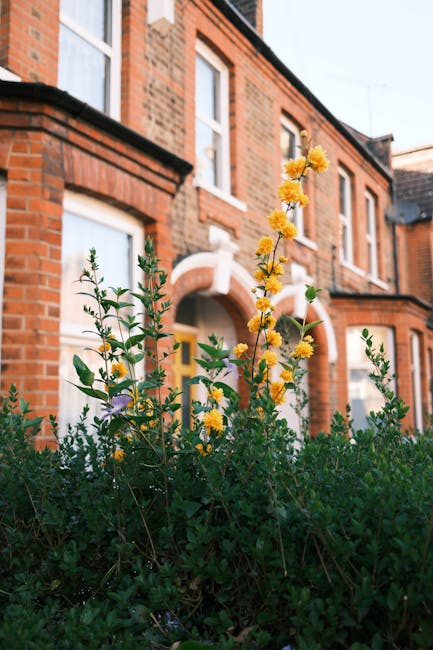
Kilburn Park Station Area Gardening Guide for Period Homes
If you live near Kilburn Park station and your home has a Victorian terrace, an Edwardian frontage, or another period character, the garden can do more than look tidy. It can frame the property, soften hard lines, and make the whole place feel cared for the moment someone walks up the path. This Kilburn Park station area gardening guide for period homes is designed to help you plan, plant, and maintain a garden that suits older architecture without turning it into a fussy museum piece.
To be fair, the best period-home gardens in this part of London usually do three things well: they respect the building, cope with urban conditions, and stay manageable through the year. That sounds simple. In practice, it takes a bit of judgement. You have to think about shade, narrow front plots, boundary hedges, drainage, privacy, and the way a front garden looks from the street on a wet Tuesday morning in January. Not glamorous, maybe, but very real.
In this guide, you'll find practical advice on style, planting, maintenance, common mistakes, compliance, and when it makes sense to bring in professional help. If you want broader context on the services behind regular upkeep, it can also help to look at the services overview and the company's about us page for a sense of approach and standards.
Table of Contents
- Why this matters for Kilburn Park period homes
- How the approach works in practice
- Key benefits and practical advantages
- Who this is for and when it makes sense
- Step-by-step guidance
- Expert tips for better results
- Common mistakes to avoid
- Tools, resources and recommendations
- Law, compliance, standards and best practice
- Options, methods and comparison table
- Case study or real-world example
- Practical checklist
- Conclusion
- Frequently asked questions
Why Kilburn Park station area gardening guide for period homes Matters
Period homes near Kilburn Park often have a strong architectural identity: sash windows, decorative brickwork, tiled thresholds, railings, bay fronts, and narrow gardens that need to work hard. The garden is not just an add-on. It is part of the house's visual rhythm. Get it wrong, and even a lovely building can feel cramped, overgrown, or oddly disconnected from the street.
A good garden plan matters for a few very practical reasons. First, older properties typically have different proportions from newer ones. A planting scheme that looks fine in a larger suburban plot may swallow a compact front garden here. Second, urban conditions can be harsh. Pollution, reflected heat, shade from neighbouring buildings, compacted soil, and limited root space all shape what will actually thrive. Third, a lot of period-home owners want character without high-maintenance chaos. Nobody wants to spend every weekend wrestling with a hedge that has taken on a life of its own. Happens faster than you'd think.
There is also the question of property value and street appeal. A neat, sympathetic garden can make a home feel more complete. That does not mean "formal" in every case. It means balanced, well-scaled, and clearly maintained. In a place like Kilburn Park, where the streets carry a mix of architectural styles and everyday London pace, the winning formula is usually calm, coherent, and resilient.
Expert summary: period-home gardening in this area is less about dramatic landscaping and more about proportion, plant choice, and reliable maintenance. If you remember that one thing, you're already ahead of a lot of rushed front-garden makeovers.
How Kilburn Park station area gardening guide for period homes Works
The approach starts with the building, not the plants. That may sound obvious, but many gardens go wrong because the planting is chosen first and the architecture second. For a period home, you want the garden to echo the home's style and scale. That does not mean copying the past exactly. It means choosing forms, materials, and planting rhythms that feel naturally at home beside the house.
In practical terms, the process usually follows a few stages:
- Assess the property frontage. Look at light levels, frontage width, soil condition, drainage, and how the garden is seen from the pavement.
- Decide the function. Is this mainly a welcoming front garden, a privacy screen, a pollinator-friendly space, or a family garden with storage and access?
- Choose a style direction. For period homes, this often means structured planting with softer edges, or traditional planting with a contemporary, low-fuss finish.
- Select plants that suit the site. Shade-tolerant, drought-aware, and urban-hardy plants are often the safest bet near busy London roads.
- Plan maintenance from the start. If a hedge, climber, or perennial border needs constant intervention, it may be the wrong choice for your schedule.
Think of it like tailoring a coat. The fabric matters, yes, but fit is what makes it look right. A garden near Kilburn Park that is too dense, too tall, or too busy can overwhelm a beautiful frontage. A better design gives the house some breathing room.
For homes that need regular hedge shaping, boundary trimming, or seasonal tidy-ups, it is worth understanding the practical scope of work first. The services overview and pricing and quotes pages are useful if you want to compare options and think through what level of help makes sense for your garden.
Key Benefits and Practical Advantages
A well-planned period-home garden near Kilburn Park gives you more than a pretty entrance. The benefits are both visual and practical, and in many cases they overlap.
- Better street presence. A tidy, balanced garden helps the property feel cared for and coherent.
- Improved privacy. Carefully positioned hedges, climbers, or layered shrubs can soften sightlines without making the frontage feel closed in.
- Lower long-term maintenance. Choosing the right plants early reduces the amount of emergency pruning later. Ask anyone who has had to rescue an overenthusiastic laurel. Not fun.
- Better seasonal interest. Period gardens often benefit from year-round structure, with flowers, foliage, and bark or evergreen texture across the seasons.
- More usable outdoor space. Even a small front garden can become useful for bins, bikes, access, or a sitting spot if it is designed well.
- Stronger architectural harmony. The garden supports the house instead of competing with it.
There is a subtle but important benefit too: a good garden reduces visual noise. In a dense urban setting, that can make a home feel calmer from the moment you arrive. You open the gate, step inside, and it just feels settled. That matters more than people sometimes admit.
| Garden choice | What it does well | Possible drawback | Best for |
|---|---|---|---|
| Formal clipped hedging | Creates structure and clear lines | Needs regular trimming | Traditional period facades |
| Informal mixed planting | Looks softer and more natural | Can appear untidy if not managed | Front gardens with room to layer plants |
| Low-maintenance evergreen scheme | Stays neat through winter | Can feel static if not balanced | Busy households and compact plots |
| Mixed hedge and perennial border | Combines structure with seasonal colour | Needs some planning | Owners wanting character and flexibility |
Who This Is For and When It Makes Sense
This guide is especially useful if you own or manage a period property near Kilburn Park station and you want the garden to feel intentional, not improvised. That includes Victorian terraces, Edwardian houses, maisonettes with front strips, converted flats with shared entrances, and small private gardens tucked behind older buildings.
It also makes sense if you are:
- preparing a home for sale and want the front approach to look sharper
- frustrated by a hedge, border, or climber that has become too much to handle
- trying to create privacy without blocking daylight
- replacing a tired planting scheme with something more in keeping
- working with limited space and need a clearer plan
- wanting a garden that supports period character rather than fighting it
In our experience, the people who benefit most are not necessarily the ones with the biggest gardens. They are the ones with the tightest spaces and the most visible frontages. Small gardens demand discipline. Every plant is doing a job, whether you intended that or not.
If you are unsure whether professional input is worthwhile, consider the trade-off honestly. A quick tidy is one thing. A redesign of the frontage, regular hedge care, or a full seasonal maintenance plan is something else. If you do decide to get expert help, the company's contact page is the natural next step, and the about us page can help you judge whether the approach fits what you want.
Step-by-Step Guidance
Here is a practical way to approach gardening for a period home near Kilburn Park without overcomplicating things.
1. Start with the building's character
Look at the house in daylight from the pavement. What are the strongest features? Brick detailing, bay windows, railings, narrow path lines, or maybe a decorative front step? The garden should echo those features. A strong vertical facade usually suits layered planting with some height, but not a hedge so tall it swallows the windows.
2. Measure the space properly
Do not guess. Measure the width of borders, path access, and the distance from the frontage to boundary lines. A few centimetres matter in smaller gardens. A shrub that seems modest in a nursery pot can become a wall in two seasons. Truth be told, many "garden problems" start with hopeful optimism and end with a pruning saw.
3. Map the light and soil
Shady front gardens, especially those facing north or partially enclosed by neighbouring buildings, need a different palette from sunny plots. Check whether the soil is dry and dusty, damp and compacted, or oddly patchy. In older urban gardens, soil can change from one corner to the next.
4. Decide on structure first
Before choosing flowering plants, set the skeleton of the garden. That might mean a low hedge, clipped shrubs, gravel edging, boundary climbers, or a path shape that makes the space feel wider. Structure keeps the garden looking composed in winter, when flowers have packed their bags.
5. Build the planting around maintenance reality
Choose plants you can genuinely maintain. A low-maintenance scheme is not the same as a no-maintenance scheme. Even easy plants need pruning, deadheading, watering in dry spells, and the odd bit of encouragement. Be honest about your time.
6. Plan seasonal interest
A period garden works best when it looks good more than one month a year. Mix evergreen framework with spring flowers, summer texture, and autumn colour where possible. You do not need everything at once. A little rhythm goes a long way.
7. Finish with a maintenance plan
Write down what needs doing in each season: hedge shaping, clearing leaves, checking for overgrowth, refreshing mulch, and keeping paths clear. This is where a lot of lovely gardens succeed or fail. Not because the design was bad, but because no one had a realistic upkeep plan.
Expert Tips for Better Results
Below are a few practical tips that tend to make a real difference in period-home gardens around London.
- Use repetition. Repeating a plant, colour, or shape creates calm. Too many different things in a small space can look busy very quickly.
- Keep heights controlled near the house. Taller planting is often best toward the boundary or as a subtle screen, not right against the windows.
- Choose clean edge lines. A crisp border or path line makes even modest planting look more deliberate.
- Leave room for access. A beautiful garden that becomes awkward to walk through is not a good design.
- Think about winter. The garden will spend a lot of time looking bare. Make sure the shape still works then.
- Prune little and often. Light, regular care is usually better than dramatic rescue work every six months.
A small human detail, but a useful one: if you can stand at the front gate with a cup of tea early in the morning and feel that the garden looks calm rather than demanding, you are probably on the right track. That is a very good test. A simple one, too.
For ongoing upkeep, especially where hedges, boundary plants, or overgrown edges need attention, the company's recycling and sustainability page is worth a look if you care about how green waste is handled after the job is done.
Common Mistakes to Avoid
Some mistakes keep showing up in period-home gardens, and the frustrating thing is that most of them are avoidable.
- Planting for the nursery, not the site. A plant that looks lovely in a sheltered display area may hate your actual garden.
- Overfilling small spaces. Crowding borders makes maintenance harder and can make the frontage look smaller.
- Ignoring mature size. This is a classic. People fall in love with a shrub and forget that it grows up, out, and occasionally sideways.
- Using too many hard contrasts. Strong colours and mixed textures can be effective, but too much variety can fight the architecture.
- Neglecting drainage. Wet patches, compacted soil, and poor runoff can damage planting and create messy paths.
- Letting hedges drift. Once a hedge loses shape, it can take several seasons to look right again.
- Forgetting neighbours and sightlines. Especially in close London streets, a plant that blocks light or spills over a boundary can become a problem fast.
One of the biggest errors, honestly, is wanting a "finished" garden immediately. Gardens evolve. Period gardens especially benefit from a little patience. You can still make them look smart from day one, just don't expect the long-term character to appear overnight.
Tools, Resources and Recommendations
You do not need a van full of gear to maintain a good period garden, but the right tools make life easier and safer.
- Sharp secateurs for deadheading and small pruning jobs
- Long-handled loppers for thicker stems and awkward reaches
- Hedge trimmers for keeping boundary growth neat and even
- Spade and border fork for soil work and planting
- Wheelbarrow or garden sacks for clearing cuttings efficiently
- Gloves and eye protection for safer handling of thorny or dense growth
- Watering can or hose setup for dry spells and establishment periods
If you are comparing professional support, it helps to think beyond the immediate tidy-up. Ask how the garden waste is handled, whether the team works with health and safety in mind, and whether their service fits the level of care your property needs. Pages like health and safety policy, insurance and safety, and terms and conditions are useful trust signals when you are comparing providers. A bit unexciting, yes. Still worth reading.
If you are arranging work that involves access, waste clearance, or regular maintenance, you may also want to review payment and security so you know how the process is handled.
Law, Compliance, Standards, or Best Practice
For most homeowners, the main legal and practical concerns are straightforward: keep your garden safe, avoid creating a nuisance, and make sure any work done on the property is carried out responsibly. In a tightly built-up area, this matters more than people sometimes think.
Best practice usually means:
- keeping paths, entrances, and boundaries clear and safe
- being careful with branches, hedges, and climbers that may affect neighbouring properties
- checking whether any trees or boundary features need additional care before pruning
- using insured professionals for larger or higher-risk jobs
- disposing of garden waste responsibly
If you hire someone, it is sensible to confirm practical safeguards rather than assuming everything is covered. A reputable provider should be clear about risk management, customer communication, and how disputes are handled if something goes wrong. The company's complaints procedure and privacy policy are helpful examples of the kind of supporting information that builds trust.
There is also the quieter ethical side of things. Many homeowners do care about responsible working practices, especially when they are inviting a team onto private property. If that matters to you, the modern slavery statement is another page that can help show broader business standards. Not every reader will check that, but the people who do usually appreciate it.
Options, Methods, or Comparison Table
Different gardening approaches suit different period homes. There is no single right answer, which is slightly annoying but true. The best choice depends on light, frontage size, maintenance tolerance, and how formal you want the overall effect to feel.
| Method | Look and feel | Maintenance level | Good choice if... |
|---|---|---|---|
| Clipped front hedge with simple border | Smart, traditional, tidy | Moderate | You want a classic look and clear structure |
| Mixed shrubs and perennials | Soft, layered, seasonal | Moderate to high | You enjoy gardening and want more colour |
| Evergreen screening with minimal borders | Calm and low fuss | Low to moderate | You want privacy and consistency with less effort |
| Loose cottage-style planting | Informal, romantic, full | High | You have enough room and enjoy regular upkeep |
A useful rule of thumb: the smaller the front garden, the more disciplined the design should be. In larger rear gardens, you can afford a bit more softness and experimentation. In a narrow Kilburn frontage, restraint usually looks more expensive than abundance. Slightly unfair, perhaps, but there we are.
Case Study or Real-World Example
Imagine a typical period terrace near Kilburn Park with a compact front garden, a short path to the door, and a mixed hedge that has grown unevenly over time. The owners want privacy from the street, but they do not want the house to look hidden. They also want something that feels in keeping with the brick frontage and original proportions.
A sensible makeover might start with selective reduction of the hedge rather than replacing it outright. That keeps some privacy while restoring shape. The border could be simplified with a small number of reliable evergreen and flowering plants, chosen for shade tolerance and urban resilience. Path edges are cleaned up, any trip hazards are removed, and the final finish is designed to leave the front door visible without exposing the whole interior to passers-by.
The result is not dramatic in a magazine sense. It is better than that. The house looks larger, the entrance feels brighter, and the garden stops asking for weekly rescue work. A neighbour might only say, "That looks much better," but that is often the real win. Quietly good is underrated.
If the garden needed ongoing attention after that initial reset, a routine maintenance plan would be easier to manage than repeated heavy work. For homeowners comparing support levels, the pricing and quotes page can help frame the decision, even if you are just gathering a sense of scope.
Practical Checklist
Use this checklist before you start or before you bring someone in to help.
- Have I assessed light, shade, and soil conditions?
- Does the planting suit the age and style of the house?
- Are the shrubs and hedges the right mature size for the space?
- Will the design still look good in winter?
- Is there a clear plan for hedge trimming and border maintenance?
- Have I considered privacy without blocking too much light?
- Are paths, steps, and entrance points clear and safe?
- Do I know how garden waste will be removed or recycled?
- Have I checked trust details such as insurance, policies, and terms?
- Do I want a one-off tidy-up or ongoing maintenance?
Quick takeaway: if the garden supports the house, stays manageable, and still feels calm after a damp week in November, you're in good shape.
Conclusion
Gardening for period homes near Kilburn Park is really about balance. Respect the architecture, work with the space you have, and choose planting that can survive real London conditions without turning maintenance into a second job. The best results are usually the ones that feel natural, steady, and thoughtful rather than flashy.
Whether you are improving a front garden for kerb appeal, sorting out a hedge that has grown a bit too bold, or planning a more sympathetic planting scheme, the key is to start with proportion and finish with a realistic care plan. Do that, and the garden will support the house in all the right ways.
If you are ready to move from ideas to action, Get a free quote today and see how much you can save.
And if you are still weighing things up, that is fine too. A good garden is rarely rushed, and that is part of its charm.
Frequently Asked Questions
What makes gardening for period homes different from modern properties?
Period homes usually have stronger architectural character, narrower frontages, and more visible street-facing details. The garden needs to complement the building's proportions instead of overpowering them.
What plants work best near Kilburn Park station area period homes?
Plants that handle urban conditions well tend to be safest: compact evergreens, shade-tolerant shrubs, reliable perennials, and climbers suited to boundary work. The exact choice depends on light and soil.
How do I make a small front garden look bigger?
Use clean lines, limit the number of plant types, keep taller planting away from the house, and avoid overcrowding. Repetition and structure usually create more visual space than lots of variety.
Is a formal garden better for a Victorian or Edwardian house?
Not always. A lightly formal structure often suits period homes well, but the best approach depends on the frontage, maintenance needs, and how traditional you want the result to feel.
How often should hedges be trimmed in a period home garden?
That depends on growth rate and the look you want. Many hedges benefit from regular light trimming rather than infrequent heavy cutting, because it keeps the shape neater and easier to manage.
Can I keep privacy without blocking too much light?
Yes. Layered planting, well-placed hedges, and selective screening can protect privacy while still leaving windows and the entrance feeling open. It is a bit of a balancing act, but very doable.
What are the biggest mistakes homeowners make with older property gardens?
Common issues include planting too large for the space, ignoring mature size, overcrowding borders, and letting hedges lose their shape. These mistakes are fixable, but they can take time to undo.
Should I choose low-maintenance or traditional planting?
If you are busy, low-maintenance structure with a few reliable plants is often the better choice. Traditional planting can look lovely, but it usually needs more seasonal care.
Do I need a professional for a period-home garden makeover?
Not always. Small tidy-ups and basic planting can be done yourself. But if the garden needs hedge work, restructuring, improved privacy, or safer handling of larger growth, professional help may be the wiser route.
How do I know if a gardening service is trustworthy?
Check for clear service information, insurance and safety details, transparent terms, and sensible communication. Support pages like insurance and safety and terms and conditions can help you judge how seriously the business takes its responsibilities.
What should I ask for when requesting a quote?
Ask what work is included, how waste will be handled, whether trimming or shaping is part of the price, and whether the quote covers one-off work or ongoing maintenance. Clarity upfront saves awkwardness later.
How can I keep the garden looking good through winter?
Focus on structure: evergreen planting, clean borders, tidy edges, and a hedge or boundary line that still looks intentional when flowers are gone. Winter is when good design quietly proves itself.